The following information is to be used as a guide to and at the discretion of the end-user and should not replace a doctor’s opinion.
OVERVIEW
Good health is not a destination — it is a daily practice built from consistent, informed choices. For South African women, understanding the science behind a healthy lifestyle has never been more important. The country faces a dual burden of disease, with noncommunicable diseases (NCDs) such as heart disease, diabetes, and cancer rising sharply alongside ongoing infectious disease challenges. Many of these conditions are preventable through lifestyle choices.
Sustainable wellness involves making small, consistent, and enjoyable lifestyle changes rather than drastic, overnight overhauls. Instead of intense, unsustainable routines, adopt small, repeatable habits like a 10-minute walk after dinner, drinking more water, or going to bed 20 minutes earlier.
By focusing on, “What can I add to my life?” rather than “What do I have to give up?”, you can make wellness a sustainable, enjoyable part of your daily life.
1. PHYSICAL ACTIVITY
Why It Matters
Physical inactivity is one of the leading risk factors for death worldwide. Regular exercise helps prevent and manage cardiovascular disease, type 2 diabetes, certain cancers, depression, and anxiety. Globally, women are less physically active than men by an average of 5 percentage points — a gap that translates directly into poorer health outcomes.
According to the World Health Organisation, regular physical activity improves cardiorespiratory fitness, muscular strength, bone health, and mental wellbeing.
2. NUTRITION & HEALTHY EATING
Why It Matters
Diet is closely linked to the development of NCDs including heart disease, stroke, type 2 diabetes, and certain cancers — which are responsible for the majority of deaths in South Africa. Eating a wide variety of minimally-processed, nutrient-dense foods supports immune function, healthy weight, bone health, and energy levels.
3. HYDRATION
Why It Matters
Water makes up approximately 60% of the adult body and is essential for virtually every bodily function — from regulating temperature and supporting kidney function, to aiding digestion and maintaining cognitive performance. Even mild dehydration can impair concentration, cause headaches, and reduce physical performance.
4. SLEEP
Why It Matters
Sleep is one of the most underrated pillars of health. Chronic sleep deprivation is linked to weight gain and obesity, type 2 diabetes, high blood pressure, heart disease, stroke, depression, impaired immune function, and increased risk of accidents. Good sleep allows the body to repair and the brain to consolidate memories and regulate mood.
5. MENTAL HEALTH & STRESS MANAGEMENT
Why It Matters
Mental health is integral to overall health — the WHO defines health as ‘a state of complete physical, mental and social well-being.’ Women are more likely than men to report higher stress levels, depression, and anxiety. Chronic, unmanaged stress is linked to cardiovascular disease, weakened immunity, hormonal disruption, menstrual irregularities, and mental health disorders such as depression and PTSD.
The American Psychological Association consistently finds that women report higher average stress than men, and are more likely to experience financial, relational, and caregiving stressors. In South Africa, additional stressors include socioeconomic inequality, gender-based violence, and limited access to mental health services.
6. ALCOHOL & SUBSTANCE ABUSE
Why It Matters
Women metabolise alcohol differently from men — kilogram for kilogram, women absorb more alcohol and reach a higher blood alcohol concentration from the same amount. This means health risks begin at lower consumption levels for women. Alcohol is classified by the International Agency for Research on Cancer (IARC) as a Group 1 carcinogen, in the same category as tobacco and asbestos. It is directly linked to at least seven types of cancer, including breast cancer.
7. PREVENTATIVE HEALTHCARE & REGULAR SCREENINGS
Why It Matters
Many serious conditions — including cervical cancer, breast cancer, diabetes, and hypertension — are far more treatable when detected early. South Africa has a high burden of several preventable diseases, and routine screening is one of the most powerful tools women have.
8. HEALTHY WEIGHT MANAGEMENT
Why It Matters
Overweight and obesity are major risk factors for type 2 diabetes, heart disease, stroke, certain cancers, and joint problems. South Africa has one of the highest rates of female obesity in sub-Saharan Africa.
9. SOCIAL CONNECTION & PURPOSE
Why It Matters
Strong social relationships are one of the most consistent predictors of good health and longevity. Social isolation and loneliness are associated with increased risk of depression, cognitive decline, and even premature death — risks comparable to smoking 15 cigarettes a day, according to some studies. Women who maintain meaningful social bonds tend to manage stress better, recover more quickly from illness, and report higher life satisfaction.
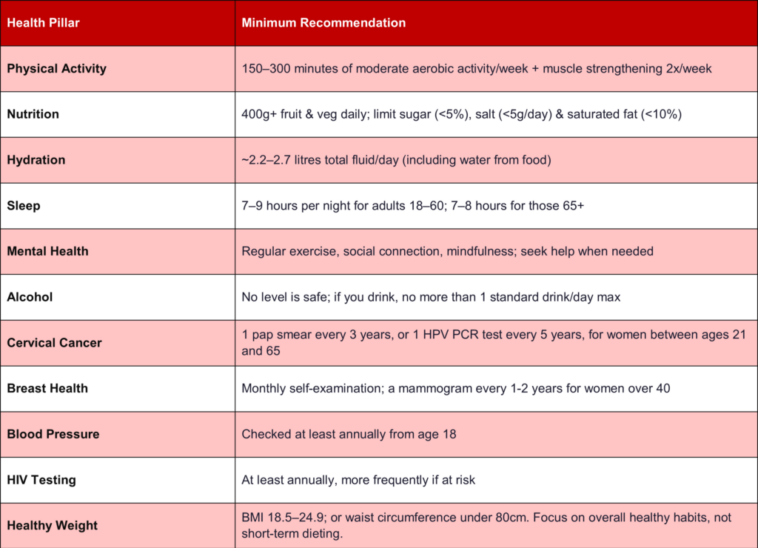
QUICK REFERENCE SUMMARY
The table below summarises the core evidence-based minimum recommendations covered in this guide.